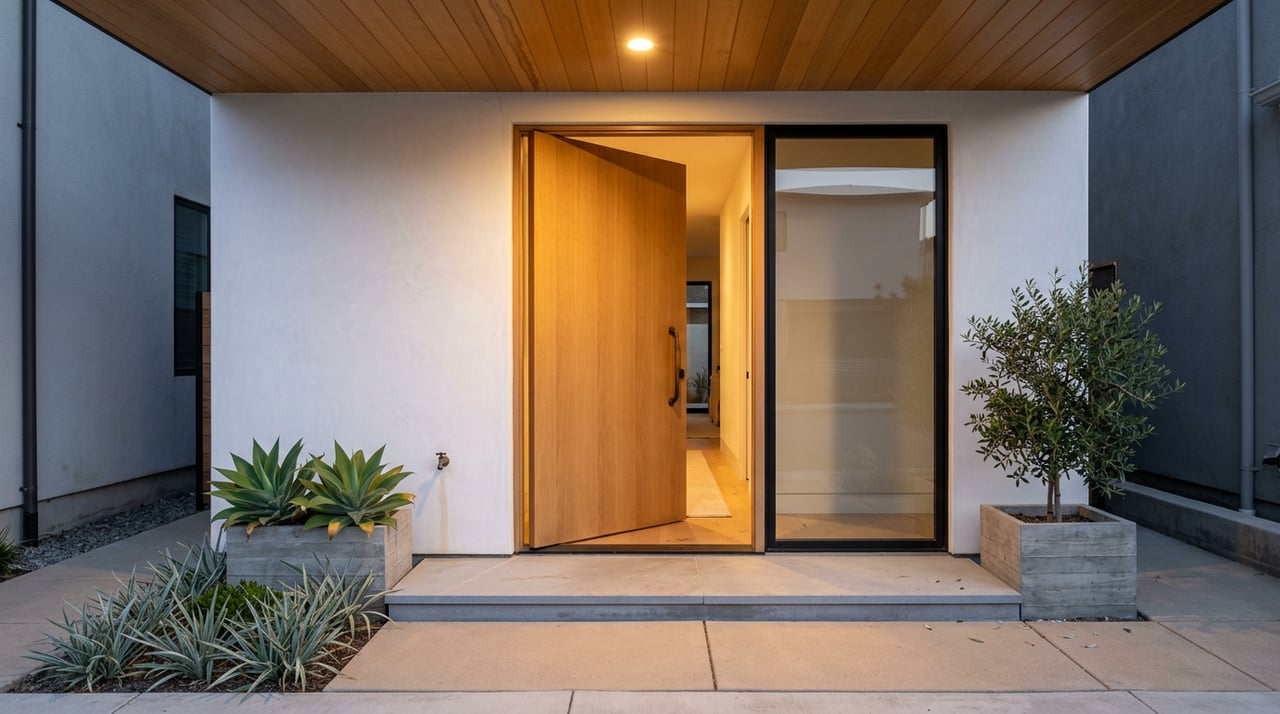
Walk past Martha's on 22nd Street at 7:45 on a Thursday night and you will see a line of people waiting outside a restaurant that has served weekend brunch since 1984. Push through an unmarked door inside and you land somewhere else entirely: twelve seats at a counter, a seventeen-course omakase, and a chef narrating each piece of fish as it lands in front of you. By breakfast the next morning, it is Martha's again, serving the white corn scramble to families off the Strand. Same address, two restaurants, depending on the hour.
That kind of layering is new for Hermosa. For years the town's food identity was set by flip-flop casual spots and beach bars. Now it holds a Michelin Bib Gourmand, a chef-run omakase residency charging $185 a seat, and a corridor of new openings tight enough that one is already replacing another before its second birthday. It is easy to credit this to the beach, or to assume Fiesta Hermosa's crowds are dragging in ambitious operators. The more accurate story starts two miles north, in a town that ran out of room.
The Chef Who Ran Out of Manhattan Beach
Chef David LeFevre built his reputation in Manhattan Beach, opening five restaurants there over roughly fifteen years, including M.B. Post, Fishing With Dynamite, Simmzy's, Tin Roof Bistro, and The Arthur J. That is a lot of real estate in a small downtown, and by his own account, the well ran dry. Space got harder to find and rents climbed past what a new concept could reasonably absorb.
So his group, Simms Restaurants, started looking south. In 2022 they partnered with chefs Ray Hayashi and Cynthia Hetlinger to open Ryla, a modern Japanese Californian spot with a strong cocktail program. This past March, LeFevre returned with AttaGirl, a Cal-Mediterranean restaurant led by chef Alice Mai, serving mezze, skewers, and house-made pasta near the pier. Chef Tyler Gugliotta of Baran's 2239, who has cooked in Hermosa since 2016, has described the years before this shift as a quiet stretch for South Bay dining. The turnaround he points to lines up with exactly this timeline: an established Manhattan Beach operator running out of runway and choosing the next beach town south instead of a third or fourth Manhattan Beach lease.
That matters if you live here, because it means the wave of new restaurants was not conjured by Hermosa's own growth. It was priced out of somewhere else first.
The Space That Changes Its Name Twice a Night
The clearest evidence of that spillover is happening right now, and it has a deadline. Sushi | Bar, a touring omakase concept with a national reputation, has been running a seasonal residency inside Martha's since mid-May, serving Wednesday through Sunday with two seatings a night. The current run ends August 31, which means residents who have been meaning to try it have just over a week left before this exact version of Martha's disappears. The group has talked about opening a permanent Hermosa location down the line, but the pop-up, unmarked door and all, closes out this month.
It is worth understanding why a national sushi group chose a 1980s beach brunch spot for a residency instead of building out its own space immediately. Pop-up residencies let an operator test a market's appetite and price tolerance before committing to a lease, and Hermosa's willingness to pay $185 a head plus a 22% service charge for a 12-seat counter answered that question fast. The Wanderlog and OpenTable reviews describe a 5.0 rating built on repeat visits, which is not the profile of a market that needed convincing.
A Corridor Turning Over Faster Than It Is Growing
The more telling sign of demand is not what is opening, it is what is closing to make room. Kasamar, a new coastal seafood and tavern concept, is expected to open on Pier Avenue this August, and it is not filling an empty storefront. It is taking over the space currently occupied by Playa Hermosa Fish & Oyster Co., a restaurant that has been a going concern by the pier for years.
That kind of displacement usually means one of two things: the outgoing tenant was struggling, or the incoming tenant was willing to pay enough to make the landlord take the deal anyway. Either way, it tells you Pier Avenue's lease economics have shifted in the same direction Manhattan Beach's did a few years ago. Vin Folk, the small bistro a few blocks over that earned a 2026 MICHELIN Bib Gourmand and a glowing Los Angeles Times review calling it proof Hermosa had become a culinary destination, opened into that same tightening market. So did Stecca Taverna, part of the same recent cluster of openings along Hermosa and Pier Avenues. A corridor does not draw that kind of competition unless operators believe the rent is worth paying.
The Range Still Holds
What keeps this from tipping into a single, precious dining scene is that the cheap end has not disappeared. A few blocks from the $185 omakese counter:
- Redwood Pie, 511 Pier Avenue, sells sourdough pizza by the 12-inch or 16-inch pie out of a stripped-down takeout counter with no website beyond an online ordering cart. The Infatuation has called it the best pizza in the South Bay, and it built that reputation without table service.
- Baran's 2239 has served New American food out of a small strip mall since 2016, and its pandemic-era breakfast burrito became popular enough to outlast the circumstances that created it.
- Coni'Seafood, which opened its Hermosa Avenue location in late 2025, brought Nayarit-style Mexican seafood, including pescado zarandeado grilled over lava stone, to a town that previously had little of it.
A neighborhood that can support a $185 tasting menu and a $17 pizza on the same three blocks is not gentrifying into one thing. It is absorbing more restaurants at every price point at once, which is a different and more durable kind of growth than a single high-end opening would suggest.
The Corridor Doubles as a Festival Ground
All of this sits inside the same footprint where Fiesta Hermosa returns for its Labor Day weekend run, September 5 through 7. The festival, now in its 52nd year, spans downtown Hermosa from Valley Drive to the beach, with a Carnival, a Makers Mercado, a food fair, and four live music stages. Organizers have set up an Acoustic Stage near the pier head, adjacent to the patio at Vista, one of the newer restaurants along the Strand, and they are actively encouraging visitors to eat at the Plaza's outdoor dining during the event rather than only at festival food vendors.
That is a small detail, but it says something: the people running Fiesta Hermosa now treat the restaurant corridor as part of the festival's draw, not just a backdrop to it. A few years ago, that framing would not have made sense. The dining and the street fair were separate reasons to be downtown. Now they overlap on purpose.
What This Means If You Already Live Here
None of this is really about food. It is about a downtown that priced itself into relevance faster than most residents noticed, driven by the same pressure that reshapes every desirable strip near the coast: operators chasing the next available lease once the last one gets too expensive. Manhattan Beach filled up first. Hermosa absorbed the overflow, and now Hermosa's own corridor is tight enough to displace a working restaurant for a new one before Labor Day.
If you have lived here a while, the practical takeaway is simple. Use the Sushi | Bar residency before August 31 closes it out. Walk Pier Avenue before Kasamar's opening changes the storefront you already know. And when Fiesta Hermosa lands over Labor Day weekend, expect the restaurant patios to feel like part of the festival, because this year, they are meant to.
Cori Downing has watched this corridor evolve from a front-row seat, and she pays attention to what a changing restaurant scene tends to say about a neighborhood's momentum long before it shows up in a listing description. If you are curious how any of this ties into what is happening with home values nearby, Corisandra Downing offers a free home valuation for Hermosa Beach owners who want a clear, no-pressure read on where things stand.