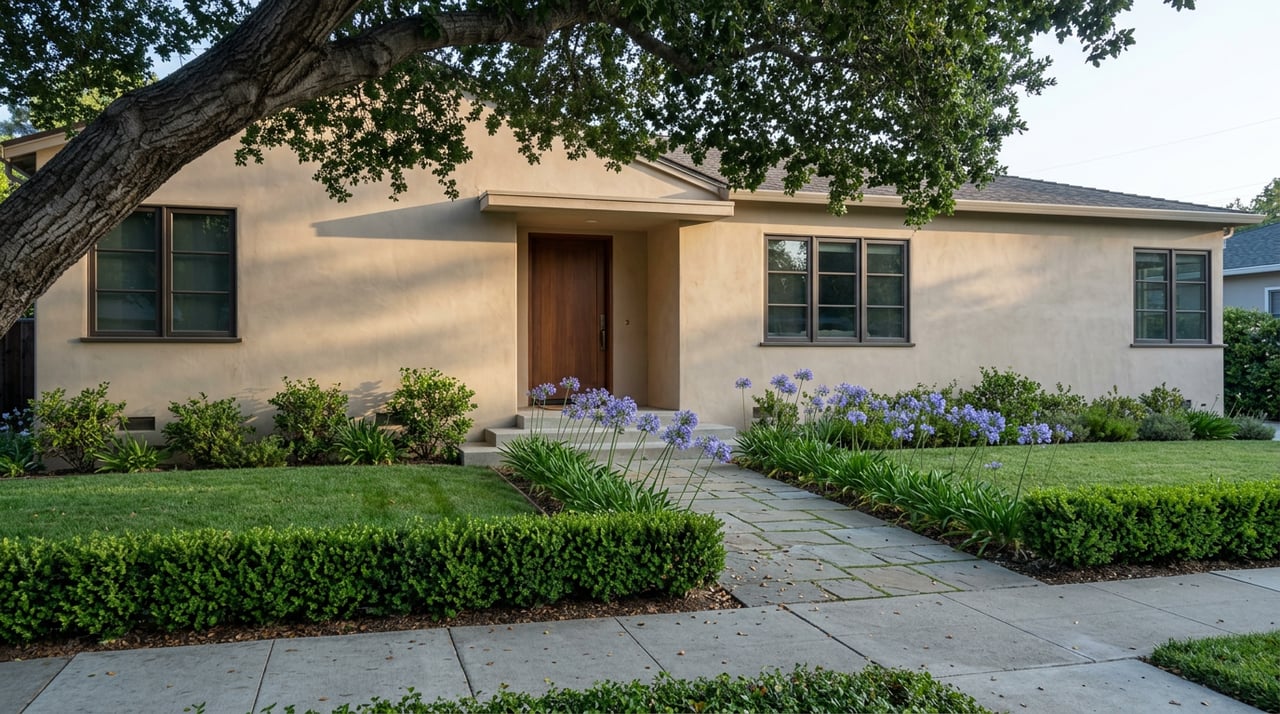
In September 2024, a Manhattan Avenue homeowner named Todd Koerner was cited $2,500 for renting a spare bedroom on Airbnb, something he had done without incident since 2012. He fought the citation instead of paying it. On March 26, 2026, a Los Angeles Superior Court judge tentatively agreed with him: Hermosa Beach's decade-old ban on short-term rentals in the coastal zone was never legally enforceable in the first place, because the city imposed it without approval from the California Coastal Commission. On May 12, the city council voted 4-1 in closed session not to appeal. That decision locked in a permanent injunction blocking enforcement anywhere in the coastal zone until the Commission signs off on something new.
If you own, are buying, or are selling a home west of the Greenbelt, this is the headline you've probably already heard. What most coverage leaves out is what the ruling actually changes at the closing table, and it isn't what most people assume. The ban falling doesn't mean short-term rental income is now a clean, documented asset. It means the city has replaced a permit requirement it could no longer enforce with a tax requirement it very much intends to enforce, and the amnesty period for getting square with that tax already closed on August 1.
The Legal Fix Wasn't About Permits. It Was About Jurisdiction.
For years, Hermosa Beach treated short-term rentals in residential zones, coastal or not, as flatly illegal, with permits available only on a small number of commercially-zoned parcels. In practice, the city had issued just 14 such permits, while AirDNA has tracked roughly 200 active listings on Airbnb and Vrbo across multiple years of city reporting. That gap between what was permitted and what was actually operating is the backdrop the Koerner ruling landed on.
The legal argument that finally worked isn't new. In Keen v. City of Manhattan Beach (2022), an appellate court ruled that a city can't ban short-term rentals in its coastal zone without first getting the California Coastal Commission to approve that restriction, either through a Coastal Development Permit or a certified Local Coastal Program amendment. Kracke v. City of Santa Barbara (2021) reached a similar conclusion. Hermosa Beach had actually beaten a version of this argument before, at the trial and appellate court level, when a judge found the city's ban didn't count as "development" requiring Coastal Commission sign-off. But the legal ground shifted under that reasoning once Keen and Kracke came down, and by 2024 the city's own appointed hearing officer, an attorney named Steve Napolitano, had already ruled in an unrelated case that the ban was invalid in the coastal zone. Napolitano overturned a $5,500 fine against the owners of the Vurpillat, a 28-unit building on the Strand that has rented rooms by the night since it was built in 1923. The city said at the time it would keep enforcing the ban anyway. Napolitano is now the city's manager. Koerner's case removed the room for that position entirely, with a citywide injunction rather than a single overturned citation.
The coastal zone covers roughly 43 percent of the city's land area, generally the portion west of the Greenbelt. East of it, the 2016 ban is still on the books and still enforceable. If you're looking at a property in North Hermosa or the eastern residential tier, this ruling doesn't touch it.
The Retroactive Bill Attached to the Injunction
Here's the part that matters more to a transaction than the injunction itself. The city didn't respond to losing its ban by walking away from short-term rentals. It responded by requiring every operator in the coastal zone to register the property, obtain a city business license, and pay Transient Occupancy Tax retroactive to May 2022, through a new portal built with Deckard Technologies. Mayor Mike Detoy framed it plainly when the portal launched: "The courts have forced our hand on short-term rentals, and until we can get a proper policy in place through the California Coastal Commission, we will ensure that operators and visitors are paying their fair share of Transient Occupancy Tax."
The city offered a carrot to go with that: operators who registered and paid all retroactive TOT by August 1, 2026 would have interest and penalties waived. That date has passed. Anyone who was operating an unregistered short-term rental in the coastal zone and hasn't yet squared up with the city is now accumulating interest and penalty exposure on top of roughly four years of back tax, not a hypothetical liability but a running one.
For a seller, that changes what "STR income" means as a selling point. A monthly rental log or an AirDNA revenue estimate tells you what a property has earned. It tells you nothing about whether that income is clean with the city. Before you market a Hermosa Beach coastal-zone property on its rental history, or before you underwrite a purchase assuming that history continues, the document worth asking for isn't a permit anymore. It's registration and TOT payment confirmation.
| What used to be true | What's true now |
|---|---|
| A short-term rental permit told you whether a listing could legally operate in the coastal zone | Coastal-zone STRs operate under a court injunction regardless of permit status; the operative document is TOT registration, not a permit |
| STR income was framed as illegal until permitted | STR income is legal until re-regulated, with a Coastal Commission review still pending |
| A Residential Building Report arrived automatically as part of most escrows | As of January 1, 2026, the city only issues one if the property owner requests it |
Why This Window Has a Shelf Life
The injunction resolves the immediate legal question. It doesn't resolve the policy question, and the city has been direct about that. Detoy's second line on the tax portal announcement was: "Our goal is to listen to the community, understand what fits our culture and craft a policy that reflects the Hermosa Beach we all want to preserve." Any ordinance that replaces the current gap will itself count as "development" under the same Coastal Act logic that struck down the original ban, meaning it will need Commission review before it can restrict anything. Hermosa Beach has a certified Land Use Plan but has never finished the implementation plan that would give it a certified Local Coastal Program, a gap that has now stretched 43 years. That review process is not fast, and the Commission has historically favored preserving short-term coastal access over restricting it.
There's also a live question about Senate Bill 346, which would let the city require platforms like Airbnb and Vrbo to disclose listing and operator data for enforcement purposes. As of the council's May budget discussion, no opt-in ordinance had been agendized, even though advocates pushed for it as the backbone of any future licensing system.
Manhattan Beach offers the closest preview of where this goes. After losing its own coastal-zone ban to the Keen ruling, it settled into a licensed system that, by fiscal year 2024-25, counted 191 licensed coastal-zone operators generating roughly $1.7 million in TOT. Hermosa Beach, working through a $3.2 million structural budget deficit and a capital improvement backlog estimated between $90 million and $220 million, has clear fiscal reason to move toward something similar rather than leave short-term rentals in an unregulated, court-created gap indefinitely.
What This Means at the Table
If you're selling a coastal-zone property with rental history, don't lead with projected nightly rates. Lead with a clean TOT account and a business license already on file. That's the piece of due diligence a buyer's lender or a cautious buyer's agent is going to ask for first, and it's the piece that a generic disclosure checklist written before March 2026 won't tell you to gather.
If you're buying with STR income in mind, underwrite today's legal window as exactly that, a window, not a permanent feature of the property. Ask whether the current operation is registered, whether back TOT has been paid, and build your numbers around a scenario where a future licensing ordinance caps operators or adds fees, the way Manhattan Beach's system eventually did.
If you already operate a short-term rental in the coastal zone and haven't registered, the amnesty is gone but the requirement isn't. Getting current now, before a listing goes on the market, keeps an unresolved city obligation from surfacing mid-escrow.
And separately from all of this, if your property has any renovation or addition history, don't assume the city will hand a buyer a Residential Building Report the way it once did automatically. As of this year, you have to ask for one. On a Strand or walk-street home where past owners added square footage or converted a garage, that's a document worth requesting yourself before a buyer's inspector finds the gap first.
A Short FAQ
Does this ruling apply to my home if I'm east of the Greenbelt? No. The 2016 ban remains enforceable outside the coastal zone. Short-term rentals there are still restricted to a small number of commercially-zoned parcels under the existing permit system.
If I buy a coastal-zone property that was operating as an unregistered STR, do I inherit the seller's back taxes? That's a question for your escrow officer and the city's finance department before you close, not after. Confirm the property's TOT registration and payment status as part of due diligence, the same way you'd confirm any other outstanding city obligation tied to the address.
Is this legal status permanent? No source available suggests that. The city has said explicitly it intends to pursue a new ordinance through the Coastal Commission, and that process typically takes years, not months.
Hermosa Beach's coastal zone hasn't gotten simpler this year. It's gotten more transparent about where the real risk sits, and that risk has moved from a permit office to a tax portal. If you're weighing whether to sell a coastal-zone property, buy one with rental income attached, or just want a clear-eyed read on what your home is worth in this environment, Corisandra Downing can walk through the numbers with you. Get a free home valuation and start with a clean picture of where you stand.